
Biomass Heating/ Boiling
Biomass heating uses renewable organic materials, primarily wood, to generate heat for homes and businesses, offering a low-carbon alternative to fossil fuels.
هذا عنصر على مستوى المشروع — السعر يعتمد على الموقع والكمية والتسليم. أرسل طلب عرض سعر وسنعود إليك خلال يوم عمل واحد بعرض مفصّل.
Description
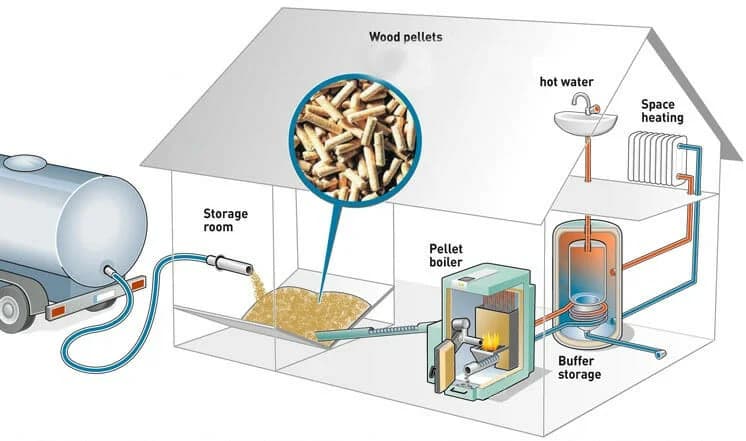
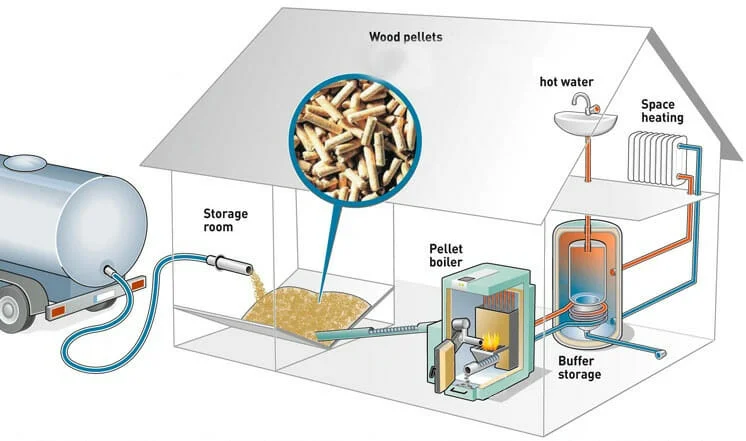
Biomass heating systems burn organic materials such as wood pellets, chips, or logs in a combustion chamber to produce heat. This heat warms water in a heat exchanger, which is then circulated through radiators, underfloor heating, or hot water systems for domestic or commercial use.
Types of Biomass Heating Systems
· Biomass Boilers: Replace conventional gas or oil boilers, providing central heating and hot water. They can be fully automated or manually loaded with fuel
· Biomass Stoves with Back Boilers: Primarily heat a single room but can also supply hot water to the central heating system
· Pellet Boilers: Use small, uniform wood pellets, often with automatic feeding systems for convenience
· Log Boilers: Burn wood logs and require manual loading, suitable for areas with easy access to firewood
Biomass Fuel Options
· Wood Pellets: Compressed sawdust, low moisture content, ideal for automated systems
· Wood Chips: Larger pieces of wood, may require more storage space.
· Logs: Traditional fuel, can be free if sourced locally, but require manual handling
· Agricultural Residues: Some systems can burn crop waste or other organic matter
Benefits
· Cost Savings: While initial installation is higher, running costs can be lower by up to 50%.
· Renewable and Carbon-Neutral: CO₂ released during combustion was previously absorbed by the plants, making it largely carbon-neutral
· Lower Carbon Emissions: Produces a fraction of the emissions compared to fossil fuels
· Energy Security: Reduces reliance on gas or oil and protects against fuel price volatility